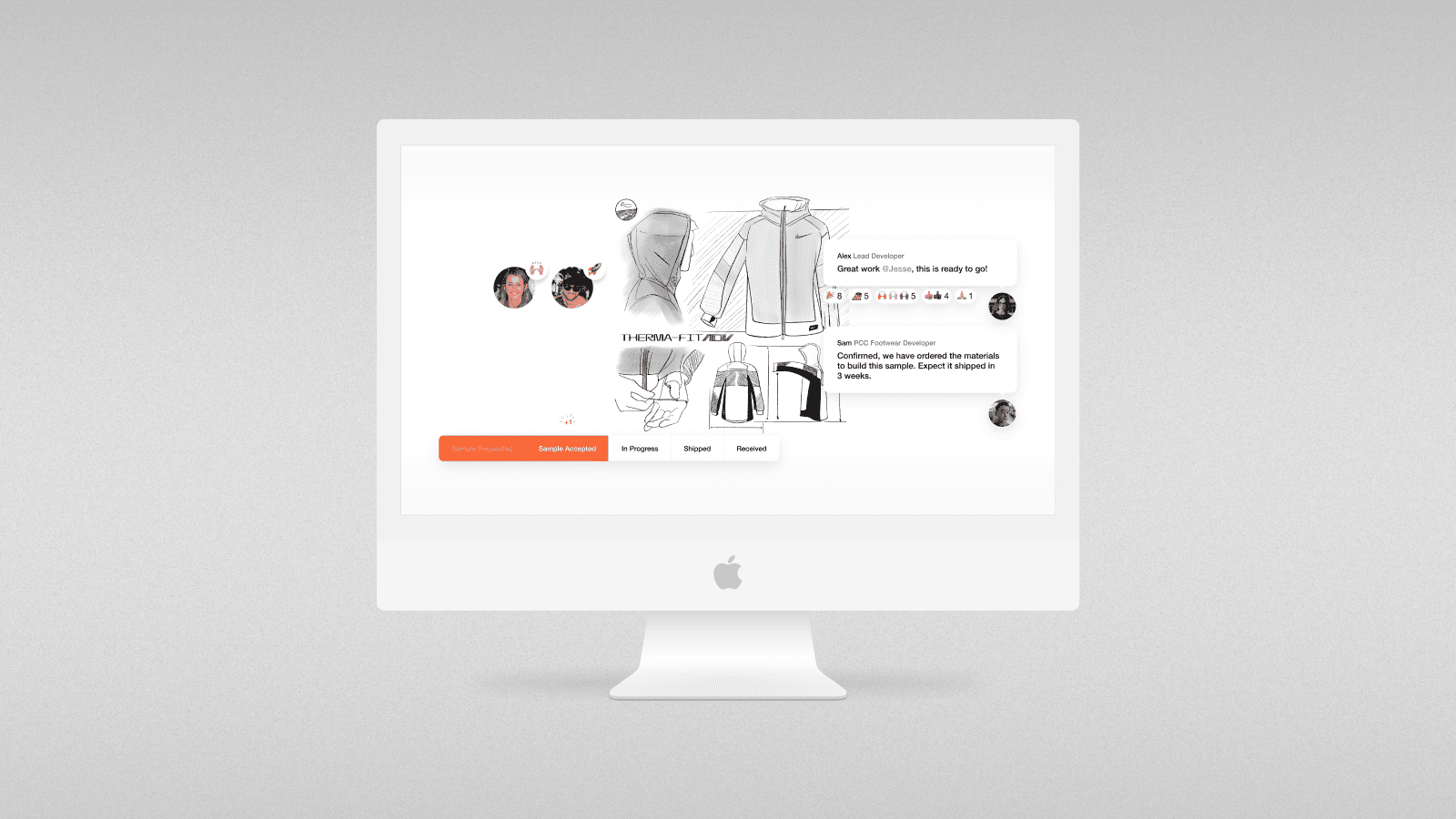
Nike Bill of Materials
• Research
Role
Digital Product Designer
Year
2024
About
At Nike, physical product developers face the challenge of balancing top-tier material quality with strict cost targets. Leveraging my expertise in UX and product design, I played a key role in designing a tool that would modernize workflows and drive efficiency.
Hypothesis
By learning more about the E2E process of apparel product development, we could transform the product development workflow with a connected, automated, and intuitive experience that enables quick, smart decision making to create world class products for consumers.
Findings
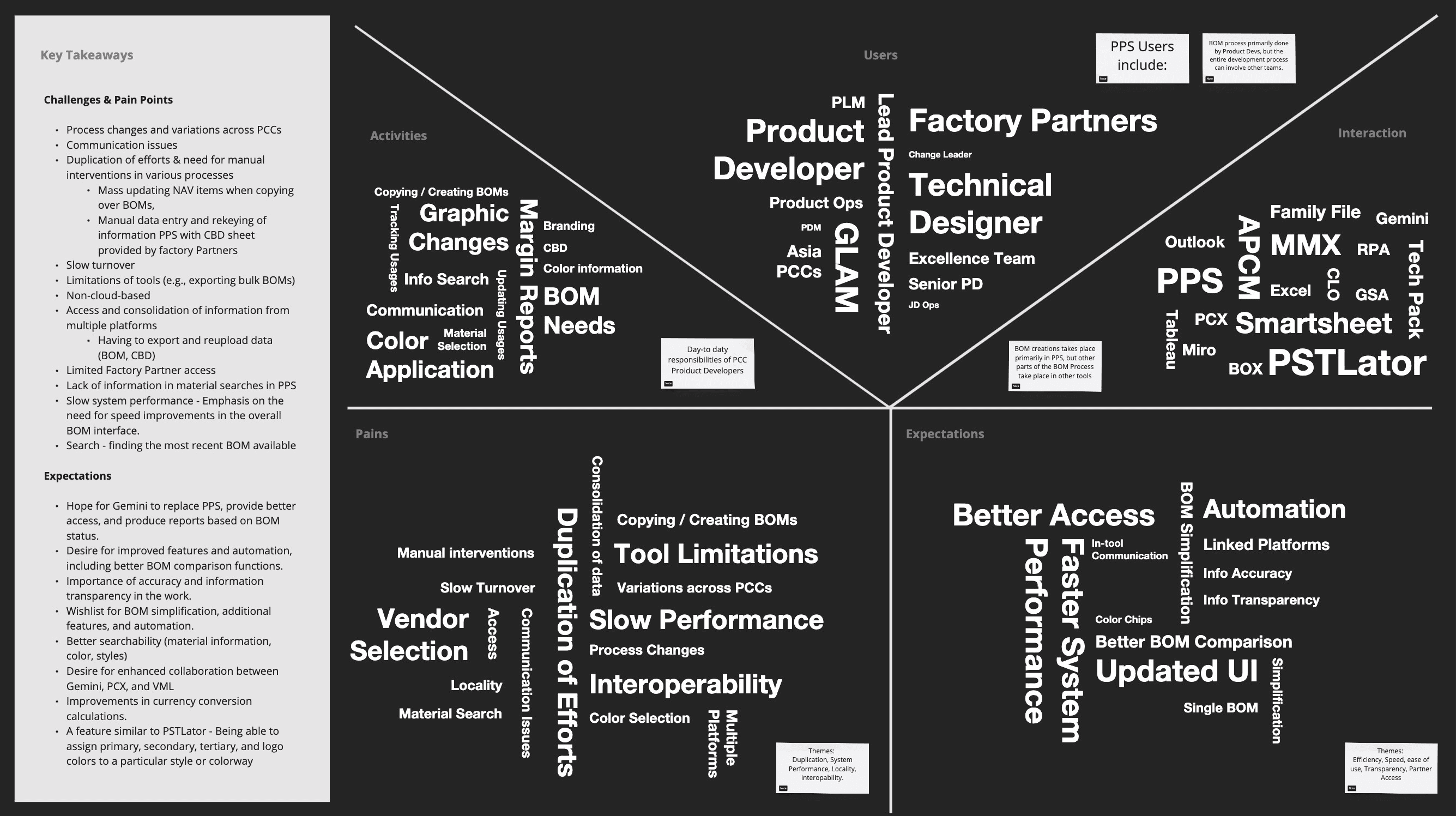
Users were frustrated by duplicated work, slow and outdated systems, reliance on local devices, and the need to jump between too many tools. These issues create inefficiency and friction across workflows. There’s a strong opportunity to streamline processes by eliminating unnecessary steps, improving system speed and usability, creating a more integrated experience, and making data more transparent and accessible. Providing permission-based, direct access for factory partners could further improve collaboration and efficiency.
Outcome
The primary system PPS is over 30 years old, creating a strong need for modernization. Beyond updating the tool itself, there’s an opportunity to redesign workflows so the system handles more of the operational work, allowing product developers to focus on creating great apparel. Apparel and footwear teams currently operate with different approaches and data structures. Creating more consistent, unified experiences across product categories would require Nike to rethink how product data is structured and shared. Managing constraints required frequent collaboration with product and engineering teams, helping align on deliverables and foster a transparent, effective working relationship.

Research: Understanding the User
User Interviews
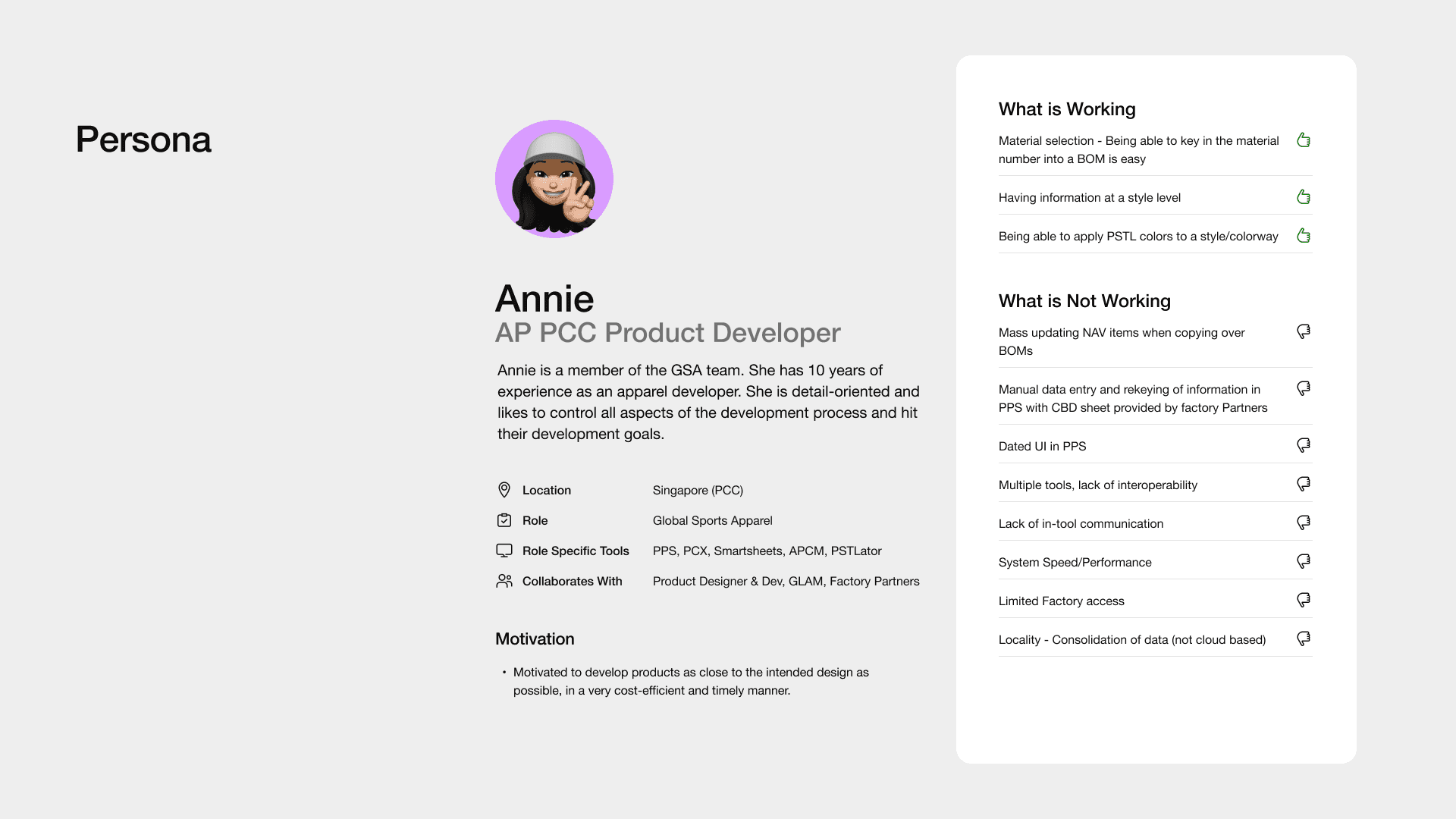
Over a 2-week timeframe, we facilitated 10 1-hour user sessions with AP Product Developers across multiple segment and dimensions in the Asia PCCs to get a better understanding of PPS (Product Process system) and how they’re utilizing the platform.
10 PDs across multiple dimensions/segments:
· Basketball (BB) - 2
· Global Football (GFB) - 2
· Tennis - 1
· Golf - 1
· Jordan Brand - 1
· M/W/Kids - 3

Nike Bill of Materials
• Research
• Prototyping
Role
Digital Product Designer
Year
2024
About
Product Development is the process is a part of product creation where a 2D or 3D design is handed off and a physical product is manufactured. This process combines PPS, apparel BOM creation, materials, FOB, CMP2.0/Costing, and Lab Dip, and other workflows that come together into the development of an apparel product. I was recruited to learn more and launch a case study around a proposed plan to update the tools and workflow for the Apparel E2E process in efforts to streamline team workflows and allow for more accurate and transparent data.
About
At Nike, physical product developers face the challenge of balancing top-tier material quality with strict cost targets. Leveraging my expertise in UX and product design, I played a key role in designing a tool that would modernize workflows and drive efficiency.
Hypothesis
By learning more about the E2E process of apparel product development, we could transform the product development workflow with a connected, automated, and intuitive experience that enables quick, smart decision making to create world class products for consumers.
Problem
The physical product development process was outdated and highly manual. Teams relied on local Excel files and worked across a multitude of different tools. Convoluted workflows led to inconsistent data, version control issues, and potential integrity risks.
Findings
Users were frustrated by duplicated work, slow and outdated systems, reliance on local devices, and the need to jump between too many tools. These issues create inefficiency and friction across workflows. There’s a strong opportunity to streamline processes by eliminating unnecessary steps, improving system speed and usability, creating a more integrated experience, and making data more transparent and accessible. Providing permission-based, direct access for factory partners could further improve collaboration and efficiency.
Solution
To create a modern platform that centralizes data, accelerates collaboration, and provides product teams with the confidence to make faster, data-driven decisions.
Key Learnings
The tool consolidated a fragmented workflow for 1,300+ users, improving efficiency and reducing unnecessary steps. As a result, users were able to complete core tasks up to 8× faster in key workflows. The solution saw strong adoption, reduced support needs, and provided a solid foundation for future improvements.
Outcome
The tool consolidated a fragmented workflow for 1,300+ users, improving efficiency and reducing unnecessary steps. As a result, users were able to complete core tasks up to 8× faster in key workflows. The solution saw strong adoption, reduced support needs, and provided a solid foundation for future improvements.


Research: Understanding the User
User Interviews
Over a 2-week timeframe, we facilitated 10 1-hour user sessions with AP Product Developers across multiple segment and dimensions in the Asia PCCs to get a better understanding of PPS (Product Process system) and how they’re utilizing the platform.
10 PDs across multiple dimensions/segments:
· Basketball (BB) - 2
· Global Football (GFB) - 2
· Tennis - 1
· Golf - 1
· Jordan Brand - 1
· M/W/Kids - 3


Research: Understanding the User
User Interviews
Over a 2-week timeframe, we facilitated 10 1-hour user sessions with AP Product Developers across multiple segment and dimensions in the Asia PCCs to get a better understanding of PPS (Product Process system) and how they’re utilizing the platform.
10 PDs across multiple dimensions/segments:
· Basketball (BB) - 2
· Global Football (GFB) - 2
· Tennis - 1
· Golf - 1
· Jordan Brand - 1
· M/W/Kids - 3


Nike Bill of Materials
• Research
• Prototyping
Role
Digital Product Designer
Year
2024
About
At Nike, physical product developers face the challenge of balancing top-tier material quality with strict cost targets. Leveraging my expertise in UX and product design, I played a key role in designing a tool that would modernize workflows and drive efficiency.
Problem
The physical product development process was outdated and highly manual. Teams relied on local Excel files and worked across a multitude of different tools. Convoluted workflows led to inconsistent data, version control issues, and potential integrity risks.
Solution
To create a modern platform that centralizes data, accelerates collaboration, and provides product teams with the confidence to make faster, data-driven decisions.
Outcome
The tool consolidated a fragmented workflow for 1,300+ users, improving efficiency and reducing unnecessary steps. As a result, users were able to complete core tasks up to 8× faster in key workflows. The solution saw strong adoption, reduced support needs, and provided a solid foundation for future improvements.